2026

Get the news in your inbox
ASIA RESEARCH NEWS MAGAZINE 2027
Our popular print and online magazine features fascinating research from diverse voices. Don't miss your chance to be a part of the 2027 edition.
Book your space here or email us at info [at] asiaresearchnews.com
Read past issues:
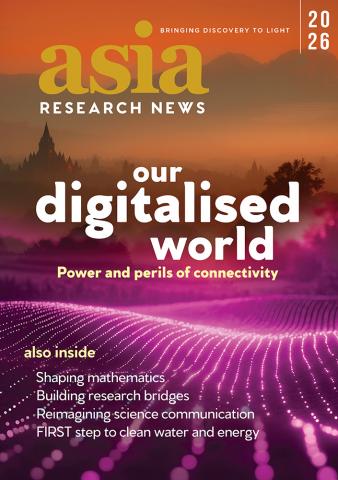

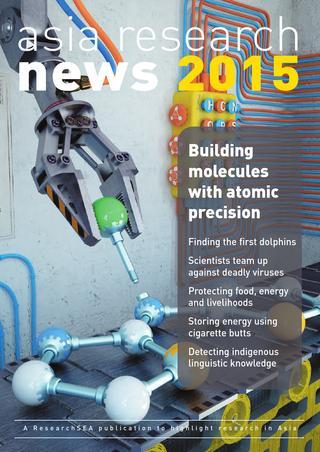
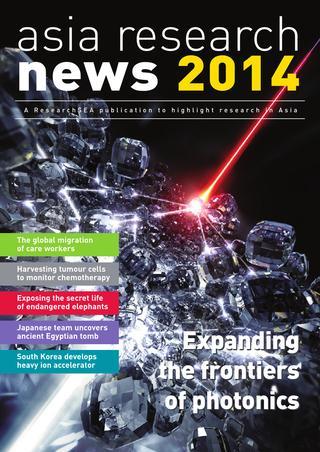
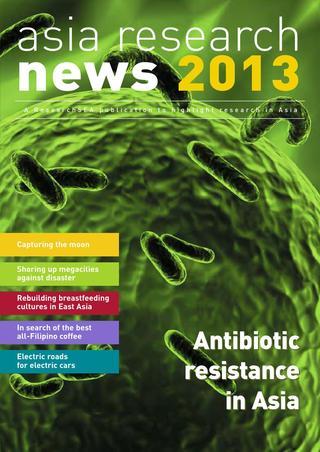
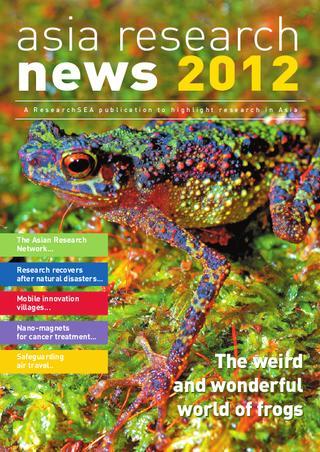
2026 Magazine articles
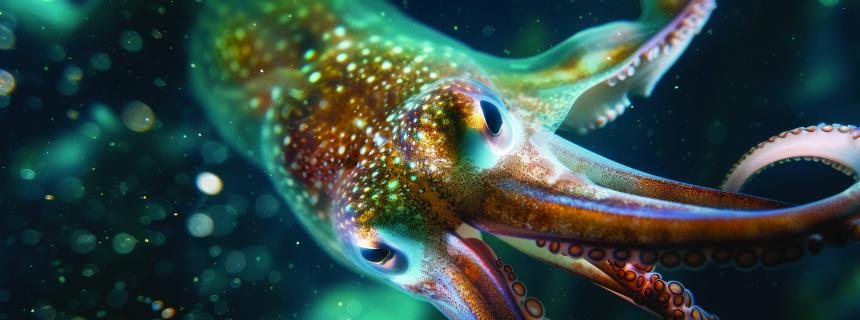 Secret history of squid and starsHokkaido UniversityYasuhiro Iba and his colleagues use complex imaging systems to reveal the secrets of Earth’s ancient creatures. |
 Creating life-saving gas from airNational Institute for Materials Science (NIMS)A simple tablet could change the way deadly breathing disorders are treated, with no need for electricity, machines, or gas tanks. |
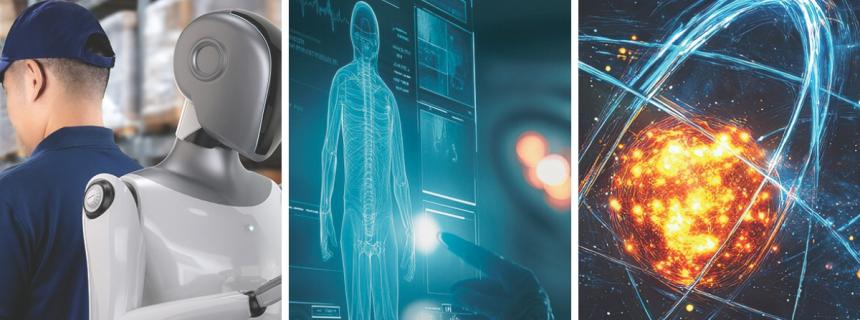 Frontiers in AI, digital twins, and quantum sensesDaegu Gyeongbuk Institute of Science and Technology (DGIST)DGIST is creating AI that can physically collaborate with people, truly personalised healthcare, and quantum sensors which will perceive the world in entirely new ways. |
 Accelerating AI-driven materials innovationNational Institute for Materials Science (NIMS)The largest ever reported database of dielectric material properties could speed up development of electronics like smartphones and energy storage systems. |
 A handy polymer detects carcinogenNational Institute for Materials Science (NIMS)A glowing test strip offers real-time protection against formaldehyde exposure in homes, workplaces, and labs. |
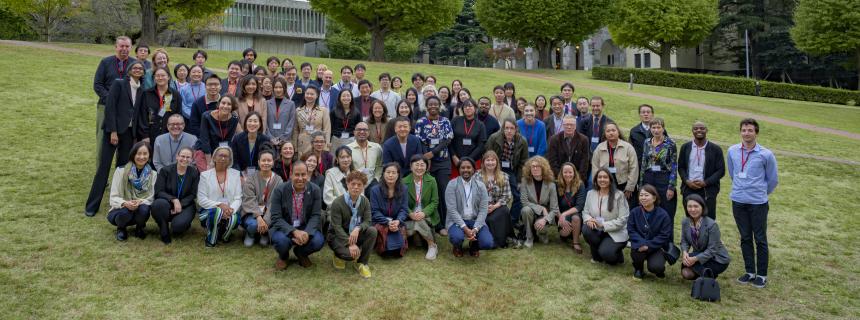 Reimagining science communication in AsiaScience communication in Asia is entering a new chapter, built on listening, adapting, and co-creating with diverse communities. |
 Digital MyanmarInternational Development Research Centre (IDRC)Myanmar’s digital ecosystem has been a lifeline for many, from education to community and humanitarian support, bringing a sense of stability in the midst of chaos. Alas, it is also a tool for repression, crime, and abuse. IDRC’s Knowledge for Democracy Myanmar has supported researchers looking into these complex issues. |
 How hydrogen causes metal fatigueNational Institute for Materials Science (NIMS)Understanding the interaction between hydrogen, metal, and the environment can help avoid metal fatigue cracks. |
 Finding best recipe for Magnesium alloysNational Institute for Materials Science (NIMS)Researchers have developed a machine learning approach to predict the mechanical behaviour of new alloys, offering potential savings in both costs and experiment time. |
 Untangling trees within filmsNational Institute for Materials Science (NIMS)Understanding how tree-like structures that form in thin films could be the key to next-generation materials for beyond-5G communications technologies. |
 FIRST step to clean water and energyCity University of Hong Kong (CityUHK)Scientists from City University of Hong Kong and collaborators from more than 20 countries are taking FIRST steps towards safeguarding communities most affected by climate change. |
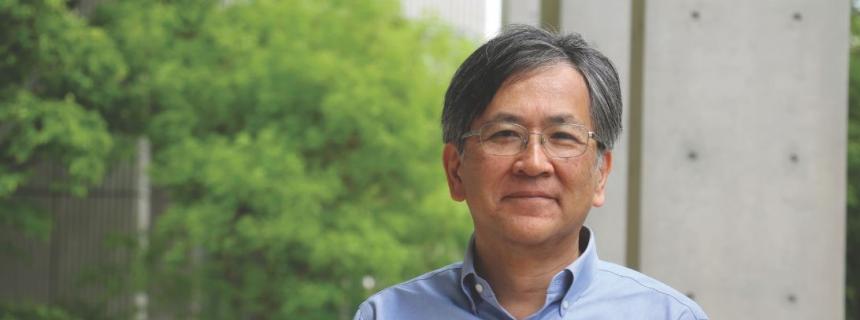 Shaping mathematics: past, present, and futureKavli Institute for the Physics and Mathematics of the Universe (Kavli IPMU)Hiraku Nakajima, a mathematician and current President of the International Mathematical Union, talks about how mathematics has been developing quietly before society’s eyes, and where he wants it to go in the future. |
 Optimising polymer production with algorithmsNational Institute for Materials Science (NIMS)By identifying the ideal manufacturing conditions, machine learning reduces the need for expensive and time-consuming experimentation. |
 Speedy collection of healing particlesNational Institute for Materials Science (NIMS)A fast and efficient tool could change the way researchers collect tiny therapeutic packages from cell cultures, offering a low-cost approach that avoids lengthy processing and complex procedures. |
 Breaking the bottlenecks in healthcareXi'an Jiaotong-Liverpool UniversityInnovative approaches in cancer screening, drug development, and radioactive hazard protection are accelerating healthcare solutions. |
 Brilliant composition for half-metal alloysNational Institute for Materials Science (NIMS)Researchers use high-brilliance synchrotron radiation to identify the most optimum composition with the highest half-metallic nature. |
 New mixers for soft electronicsNational Institute for Materials Science (NIMS)Mixing two or three liquids can achieve the right combination of functions for soft electronics. |
 Building research bridgesFrom icy seas to humid forests, research collaborations between the United Kingdom and Malaysia are helping to advance our understanding of diseases, develop vaccines and antibiotics, preserve precious habitats and address the challenge of plastic waste. |
 Turning waste heat into powerNational Institute for Materials Science (NIMS)A new material provides high-performance conversion of heat into electricity, offering a way to make electronic devices more efficient.
|
 Newsroom at Asia Research News 2026Asia Research NewsPress releases on our Newsroom reach journalists in Asia, science journalists globally, and the public. Here are selected ones that are featured in Asia Research News 2026 magazine. |